




Cost of Living in Uzbekistan in 2025

Uzbekistan cost of living
Uzbekistan is officially known as the Republic of Uzbekistan and is one of the main countries in Central Asia, with a land area of approximately 448,000 square km. The country is quite expansive; however, due to deserts and mountains, not every part of the country is suitable for human habitation.
Uzbekistan has a population of approximately 35 million people, making it the most populous country in Central Asia. The capital city, Tashkent, is the most popular city in Uzbekistan and is often the initial destination for visitors. Tashkent was a significant trading hub, especially during the Soviet Union era. It was the second most popular Soviet city after Moscow and St. Petersburg. Today, it is home to approximately 3 million residents.
Uzbekistan does not have a coastline along any sea but has several lakes and rivers within its borders. The Aral Sea is the most notable among them. The Aral Sea used to be one of the largest lakes in the world and was even referred to as a sea at one point; however, it has since shrunk, unfortunately becoming a shadow of its former self.
 Uzbekistan is a gold-rich country, and it is not a metaphor. It is the fourth largest gold producer globally, with gold extracted from mines. Additionally, the region boasts various underground treasures, including uranium. Uzbekistan's terrain is so fertile that it ranks fifth in cotton production worldwide. The country also possesses natural resources like natural gas, oil, and coal.
Looking back at the history of Uzbekistan, it was once the most popular living center in Central Asia. Merchants considered it a center between China and Europe on the Silk Road, where trade took place. Cultural interactions were quite common in Uzbekistan's history. The region's wealth and prominence attracted the attention of great rulers such as Alexander the Great and Genghis Khan. However, the Mongols deeply plundered and destroyed Uzbekistan throughout its history.
After Genghis Khan, the great ruler Timur dominated the region. Timur was an art and culture enthusiast, and he brought scholars and philosophers from many parts of the world to ensure the development of culture in the region. During Timur's reign, significant Islamic schools were constructed in Uzbekistan, such as the Registan Madrasahs in Samarkand, which are recognized by UNESCO as the first madrasahs built in Central Asia. Today, the Islamic atmosphere in the region is preserved in all its glory.
Uzbekistan gained full independence in 1991, following the dissolution of the Soviet Union, and the people of Uzbekistan take pride in their culture and history. In addition to the capital, Tashkent, Uzbekistan is home to other popular settlements like Bukhara and Samarkand, which are located in Central Asia. Uzbekistan shares borders with Afghanistan and Turkmenistan to the south, Kyrgyzstan and Tajikistan to the east, and Kazakhstan to the west and north.
Most nationalities can enter Uzbekistan for tourism purposes without encountering visa issues; however, if you plan to stay for an extended period or work in Uzbekistan, you'll need to obtain a residence permit and a work permit. It's essential to learn the official language. Uzbek and Russian are the two widely spoken languages in the country. Furthermore, over 90% of the population adheres to Islam. Therefore, we can characterize Uzbekistan as a Central Asian state that has embraced Islam.
Despite being a modern country, it values freedom in matters of clothing and belief. Unlike Arab culture, Uzbekistan is more inclined towards the culture of societies like Kazakhstan and Russia. Many people perceive Uzbekistan as unsafe due to its proximity to places like Afghanistan; however, it is actually one of the most livable countries among the Central Asian nations.
If you have American dollars, you can practically establish your own kingdom in Uzbekistan, since the power of money opens many doors. When you exchange even $100 in Uzbekistan, you'll receive stacks of Uzbek sums. When you visit Uzbekistan, the first things that will catch your attention are its bazaars, markets, and bread. You can find different types of bread with unique flavors that you might not have tasted before. The good thing is you can easily buy these beautiful breads for about $1 each. Yes, bread is cheaper in Uzbekistan than in Europe.
 Since the country's food culture is mainly centered around meat, getting meat here is also extremely affordable. For example, when you visit Uzbekistan, you can enjoy a high-quality shish kebab for just $3 at the markets. What's even better is that the vendors offer free samples of their products as soon as they make eye contact with you. This shows that they are confident in the quality of their products and aim to attract customers by offering these samples.
Uzbek people are known for their hospitality and friendly nature, and the marketplace is similar in size and appearance to those in Mongolia. When strolling through the bazaars, you will notice people’s eyes shining, and they will genuinely smile at you. You can see the sparkle in their eyes and feel their warm and welcoming nature.
However, while exploring Uzbekistan, you may encounter individuals who might try to scam you, knowing that you are a tourist and not familiar with the place. It is not fair to attribute this solely to Uzbekistan, as cunning individuals exist almost everywhere in the world. For example, they may charge you three times the regular price for a taxi or pose as officials at the entrances to museums in places like Bukhara and Samarkand, which are free, and demand entrance fees in souvenir shops. Some may tell you prices that are much higher than they should be, playing tricks with your mind. Therefore, it is advisable to stay alert and be cautious when visiting a country.
It's always a good idea to meet a local guide from that culture before exploring the country together. If you have a local person with you when you visit Uzbekistan, you are less likely to be taken advantage of. However, if you are a tourist, locals will approach you with joy and friendliness regardless of your nationality or ethnic identity. They will want to host you, feed you, and make you feel at home.
Their cuisine is known for meat dishes served with rice, and they drink tea throughout the day, especially black and green tea with lemon or other flavors. Meat and kumis are also popular. If you go to Tashkent, the capital, and speak Russian, you'll have no trouble making friends and fitting in since many people there speak Russian every day. But keep in mind that the weather may be quite hot and humid, particularly in the midst of summer in towns like Tashkent, Bukhara, and Samarkand, where temperatures can reach 50°C or more.
If you're planning to visit Uzbekistan, I would suggest doing so between August and November. Despite the scorching temperatures, you can enjoy a variety of nuts and fruits at reasonable prices. Uzbekistan's historical heritage, shaped by the Silk Road, attracts many tourists, especially those who love architecture and photography. The heat might not matter much to you in this case. In cities like Bukhara, Tashkent, and Samarkand, life doesn’t come to a halt in the evenings. You can find many establishments offering entertainment and delicious meals to tourists.
For instance, while dining at a restaurant, you might suddenly see Uzbek dancers performing their unique dances in the square. The traditional costumes they wear sparkle brightly, and their dances are graceful and unique to Central Asian culture. There are no restrictions on alcohol in Uzbekistan, so you can consume it at nightclubs or other venues as you wish. People in Uzbekistan love to have fun, and nightclubs, especially on weekends, are packed to the brim.
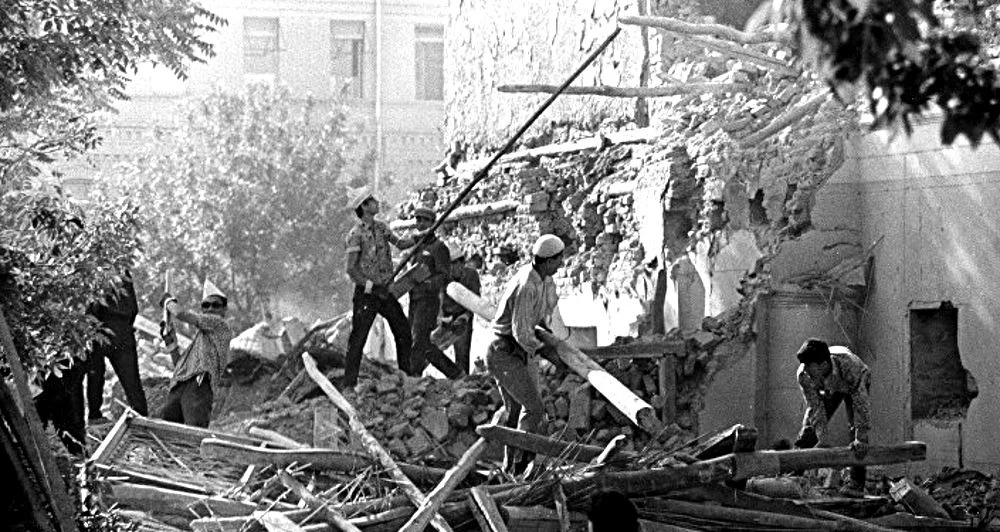 It's worth mentioning that the capital, Tashkent, still bears the pain of the devastating earthquake it experienced in 1966, with a magnitude of 8. To give you an idea, the earthquake was so massive that it destroyed over 36,000 buildings and left more than 300,000 people homeless. The earthquake was so powerful that even the aftershocks that followed measured 7 in magnitude. Survivors of the earthquake describe the experience of living in the city as being on the back of an angry camel.
However, with substantial aid from the Soviet Union, Tashkent was eventually rebuilt and transformed into a more beautiful and modern city, complete with a metro system. The rebuilt city mostly consists of four- or five-story buildings, many of which were constructed after the earthquake. These houses typically comprise minimal apartments with two rooms, one living room, and one bedroom, measuring around 70 square meters.
Because of the war between Russia and Ukraine, hundreds of thousands of Russians moved to Uzbekistan recently. This made rental rates in the nation go through the roof. Because of this, landlords are now demanding for at least $500 in rent for these small, basic units.
 If you venture onto the streets of Uzbekistan, you will notice that almost every vehicle is a Chevrolet. This is because Uzbekistan has collaborated with Chevrolet to produce more affordable vehicles for its people, resulting in Chevrolet becoming a monopoly on Uzbekistan's roads.
Uzbekistan is a country with a significant portion of its territory surrounded by mountains and hotlands resembling deserts. The majority of its population lives in rural areas, where people engage in sports like horseback riding and equestrianism, preserving the culture passed down from their ancestors. Meat is a regular part of the diet, and there are numerous traditional dishes containing meat, including horse meat. Meat is often mixed with rice, and the fat from meat is used in their bread. Uzbek pilaf is among the most popular dishes, made with lamb, peas, dried grapes, and garlic.
Uzbekistan is also renowned for its tradition of carpet making. Handcrafted carpets made in Uzbekistan are sold worldwide and are highly sought after. Many craftsmen in the city of Khiva produce goods that match the city's historical charm. Khiva is a city that has been preserved since the 6th century, with little to no modern structures present. This land is rich in treasures and has been favored by many important rulers throughout history, making it a unique and culturally significant place to visit.
Uzbekistan is a Central Asian country that values its traditions and Islamic culture. Its cities, Samarkand and Bukhara, were once known as centers of Islam.There are over 35 million inhabitants in the nation, and it has been free for 32 years.Despite being under Soviet rule from 1924 to 1991, the Uzbek people held on to their identity, language, and religion.
Uzbekistan is famous for its bazaars, which are the largest in Central Asia. The covered market in Tashkent looks like a dome or tortoise shell. Locals do all their shopping here, and vendors offer free samples to entice buyers. You can find sunflower seed vending machines, Samarkand halva, and sour cheese called Kurt in Tashkent and Samarkand bazaars.
 Bread making is an art in Uzbekistan, and the country is known for its delicious bread. Bakers bake bread inside traditional clay ovens called tandoors. They never compromise on the quality of their work and make every sacrifice possible to produce the most delicious bread. Watching the making of Uzbek bread, which is unique to the country, is as enjoyable and intriguing as tasting it. I'm sure you have never seen bakers anywhere in the world putting so much effort and passion into making a single product.
The result of this immense dedication is the Uzbek bread itself. Uzbek bread is more filling and nutritious compared to regular bread due to the various ingredients used in its preparation. In fact, soldiers used to take this bread with them to wars, as it could sustain them for up to a month without getting spoiled. At least that's what Uzbek bakers claim. On average, a single bakery in Uzbekistan produces around 8,000 of these famous Uzbek bread loaves daily.
The appetite-inducing allure is not limited to their delicious bread alone. This place stands out as one of the most carnivorous countries in Central Asia and has also gained renown for its delectable street food. During the Soviet rule, Uzbek cuisine was deprived of preserving its culinary traditions for many long years, causing it to lose its vibrancy. However, nowadays, the streets of Uzbekistan are once again vibrant and exuding life.
 The Uzbeks proudly consider themselves the unrivaled center of pilaf in the world. Local restaurants kickstart their day at 8 a.m., embarking on the art of preparing this mouthwatering dish. But mind you, they don't use small pots for this masterpiece; instead, they cook it in colossal cauldrons filled with kilos of meat, rice, chickpeas, carrots, and oil. For instance, 100 kg of meat takes 40 L of sunflower oil.
The first step in preparing the pilaf is to cook the meat and oil together in the grand cauldron until it's thoroughly cooked. Undercooked meat is not favored by the Uzbeks. Once the meat is cooked, they add the carrots and chickpeas, followed by the rice, which is the star ingredient of Uzbekistan’s national dish. To ensure the pilaf is fully cooked, they place trays on top of the cauldron and let it cook for hours. This is how the preparation of Uzbekistan's national dish generally unfolds.
Once the meal is ready, the master chefs offer their prayers, gently blending the components that make up the pilaf and presenting it to the delight of their customers. The reason why Uzbek pilaf isn't purely white is that the carrots impart their color to the rice, giving it a delightful hue.
So, when you visit Uzbekistan, remember three main ingredients related to food: plenty of bread, abundant rice, and loads of meat. These three elements hold a special place in Uzbekistan's culinary culture. Therefore, if you have any plans to visit or live in Central Asian countries, you must have a fondness for meat and not hold any grudge against it.
It's not just beef and lamb that you should try, but also horse meat, which is a popular ingredient in Uzbekistan. In fact, some families in Uzbekistan prepare pilaf with horse meat. However, this meat-eating habit has increased the risk of heart and vascular diseases among the elderly population. Some people argue that the heart diseases of Uzbeks are not caused by meat but by the oils used in cooking.
Apart from horse meat, there is also a distinct type of pastry known as samsa. In rural areas of Uzbekistan, it resembles a sea shell in appearance. People in rural areas of Uzbekistan prefer to make their bread in other dough-based products. They often use traditional oven fires for cooking instead of gas stoves. This traditional cooking method is one of the significant factors contributing to the deliciousness of Uzbek cuisine. Nearly every household in Uzbekistan has a closed oven where they prepare various pastries and bread. Inside this samsa pastry, they can include chicken or other types of meat as well.
 Uzbekistan is a country that not only excites people with its historical sites and cuisine but also with its daily life. For example, Tashkent, the capital city of Uzbekistan, is the most popular city in Central Asia, with a population of 3 million. If you have been to Russia before, you may feel that the city reminds you of Russia in many ways. For instance, despite having a vast land area of 449,000 square km, the streets and roads in Tashkent are very wide.
The relatively small population in Uzbekistan has led to spacious roads and considerable distances between buildings in its cities. Uzbekistan has a rich cultural heritage that can be seen in its architecture. Buildings in the country have a striking resemblance to those found in Russia. Even the Soviet-era playgrounds are preserved in the back streets of the city. Such structures are found in many countries that were once part of the Soviet Union.
A considerable number of Russian immigrants reside in Uzbekistan, and signs in both Uzbek and Russian languages can be seen in the capital. The Russian language holds great significance in the lives of Uzbeks, and bookstores are filled with Russian writings. Street vendors are a common sight in Uzbekistan, selling various products along the roadsides.
Uzbekistan has opened up to the world, and international chains have started establishing their presence in the country. However, it is disheartening to see children begging on the streets of Tashkent. When someone approaches you for money, they are usually being sent by someone else, and when they don't get anything, they disappear from sight. You might also notice pigeons painted in different colors on the streets. People charge money for taking photos of these birds, as they earn money through them.
 The metro system is an essential mode of transportation in Tashkent, and people rely on it for intercity travel. In 1977, the first metro in Central Asia was constructed and opened for service. One of the most impressive aspects of the Soviet era was their well-crafted metro stations, and Uzbekistan is no exception. Every metro station opened during that time captivated people with its visual appeal.
 Trains are commonly used for intercity travel in Uzbekistan. The train staff are well-presented in smart uniforms and receive a minimum wage of $320, with ordinary workers earning around $500. This low income has resulted in a significant flow of young people from Uzbekistan to European and American countries.
Uzbekistan offers a diverse range of cultures and cuisines that are sure to satisfy any traveler. However, it falls short of being a country where one can earn a good income for a permanent living.

We will arrange a meeting with a World Immigration Hub specialist for you in person or online format
During the meeting, the specialist will:
- Explain how we work and how we can help you.
- Explain the immigration process step-by-step, presenting the roadmap, budget, and financial requirements.
- Share our immigration experience and discuss key points you should know before starting your journey.
- Determine the next steps together with you.
Depending on the project’s complexity, the meeting with the manager may be coordinated with experts, designers, and assistants.
Natalia Kovalenko
Immigration Consultant
Mehman Asadzade
Immigration Lawyer